I started singin’ bye-bye, Miss American Pie
Drove my Chevy to the levee, but the levee was dry
Them good ol’ boys were drinkin’ whiskey and rye
And singin’, “This’ll be the day that I die
This’ll be the day that I die”
Don McLean, American Pie
There are big changes for my Marie Curie project. I have recently asked my department, at the University of Bologna, and the European Commission that funds my project, to change my secondment from the U.S. to a European institution. Hence, instead of spending the fall in Pittsburgh, I will be in Barcelona.
This was in no way an easy decision. Working in Barcelona with the great Miriam Díez Bosch at the Blanquerna Observatory on Media, Religion, and Culture is something I have been dreaming of since 2019, when I first tried the Marie Curie. However, my original plan was to go to the University of Pittsburgh under the supervision of Kathleen Blee and Suzanne Staggenborg, who are two of my academic heroes. While I have never met them, their email already made me feel welcomed, and I was so excited at the idea of visiting Pittsburgh for the first time that I started watching This is Us on Netflix (very little Pittsburgh is shown, but that’s the only show set in Pittsburgh I could find and it’s very good).
The main reason for this choice is that I did not feel safe in the U.S. in the current political climate as a foreign academic. Thankfully, nothing specific happened to me during my stay at the University of Colorado Boulder; on the contrary, I liked my experience. However, I cannot help but thinking that I work on gender and I wrote about Islam and politics, topics that are considered potentially “problematic” by the U.S. administration and that are marked on my visa documents; my partner, who’s on my visa, is also an academic who wrote about Palestine; I am very public on social media about what I think and what I do, and even if I cancel myself from every platform, my research is easily searchable online; I needed to transfer my visa to another university, in a moment where J visas are under greater scrutiny; I have been questioned in airports several times when I entered during the previous administration, for reasons I do not know, but this makes me scared of long airport searches, especially since I travel with my toddler daughter.
At Easter, while in Colorado, I spent time with a neighbor family we became friends with. Entering their living room, I noticed cans of food piled in boxes at every corner. The mother, a Mexican jew, casually mentioned that they were waiting for the Insurrection Act that would put martial law in place, so they were planning to shelter in place. While this did not happen, it opened my eyes to how American people, especially those who are more vulnerable and belong to minority groups, are terrified at the thought of ICE roaming the streets and the possibility of a civil war, to the point of believing in and preparing for the worst possible scenario.
I am a white European employed by a European university, so it’s unlikely that I end up in Alligator Alcatraz (even if nothing is impossible). However, I saw myself facing two possible futures: the first, a future where I stayed in the U.S. no matter what, making sure I censored myself on social media, maintained a low public profile to avoid issues, travelled without a laptop and carrying a burner phone, and took a generous amount of anti-anxiety drops after reading the news; the second, a future where I simply decided that my stay in the U.S. was not worth it, and I asked to return to Europe. I chose this second scenario, and I want to stress that I do not condemn people who decided otherwise, as we all have different priorities and needs, and the current times do not make it easy to take certain stances. But I want to list the reasons why I ultimately took this decision:
- The U.S. is no longer a good environment to be a visiting scholar. I’ve seen people I worked with being increasingly distressed, and while I will not give details for privacy reasons, this was largely due to the dismantling of DEI policies, the greater scrutiny of foreign scholars, especially from Muslim-majority countries, the revocation of visas and deportation of those engaged in pro-Palestine demonstrations, as well as cuts to current and future projects, especially research on “problematic” topics like those I work on. It was disheartening to hear many stories of scholars facing difficulties and having no power whatsoever to help them. The consequences were that, obviously, many colleagues hardly wanted to use their free time to engage with a European visiting scholar’s research, when their jobs (and, sometimes, visas) were at risk. This situation left me wondering whether working in the U.S. truly was an added value for my work, or whether it would have been better to move to a place where the overall academic climate is more relaxed, and the major issues are article rejections or data analysis software crashing instead of potential deportation.
- Doing fieldwork in the U.S. is difficult. Initially, I enjoyed the possibility of getting in contact with Catholic activists, especially from feminist groups, and my data collection went very well. However, a part of my research is on anti-gender and anti-abortion movements, and I encountered difficulties contacting them. Sometimes I received insults and threats as a response to my emails about potential interviews. While this is something that happens everywhere and to several scholars, unfortunately, these interactions coincided with a growing suspicion against academics in the U.S., and I received emails with words that echoed those used by the current administration. I did participant observations during various events, like pro-life marches, but I wasn’t exactly relaxed at the idea of taking pictures and engaging with people in a venue full of MAGA hats who likely wanted me out of their country and had police dressed in full gear protecting them. Hence, I decided to do more fieldwork in Europe instead.
- Self-censorship is highly problematic, especially for academics. This is a point I reflected upon a lot, because I spent months in the U.S. being very conscious about what I posted or what I said. While my mental health might benefit from less time on Twitter (sorry, X), I try to be public and open as a scholar, I have a presence on social media, where I disseminate my project’s results. This is even more important since I’m a media scholar studying digital media, and what I research and post online isn’t separated from the person I am. Therefore, being in a place where my social networks will be scrutinized upon entry or to obtain a visa is fundamentally against not only what I think as a person, but also what I’m doing as a scholar.
- It’s hard to make a change while being in the U.S. In connection with the topic of self-censoring, there’s the fact that being in the U.S. for a foreign scholar means being silent, low-profile, and somehow complicit with what happens (or at least this is what non-U.S. scholars are advised to do to maintain their visas). I do not pretend that I’m able to make a huge difference when I’m in Europe, but I go to demonstrations, I sign petitions, I support causes, and I’m vocal about what I think, as a person and as a professor. That’s how democracy works. However, in the U.S., I could not do any of these things, and this added to my sense of frustration and futility because it prevented me from having a voice in a democracy.
- Withdrawing from posts in the U.S. would send a message. While I do not think that anybody in the White House is crying at the idea of me moving to a non-U.S. institution, choosing to not go to conferences in America, or transferring a project elsewhere, or refusing positions in the country, can draw attention on how political decisions can have harmful consequences on society, culture, and economy. As academics, we’re used to avoiding places where we don’t feel like we have complete freedom of expression or other freedoms. However, since we’re talking about the U.S., which hosts illustrious academic institutions, we tend to apply a double standard: it’s ok to avoid or boycott countries that we perceive as “enemies” or “problematic,” and usually are from the Global South, but taking an open stance against the U.S. is somehow seen as taboo. But this is ultimately doing a disservice to the academic community, as we’re failing to condemn a situation that is not what used to be the norm.
- Institutions outside of the U.S. can produce excellent research. Regarding my previous point, we tend to have a double standard about the U.S. because it’s where we find the best universities in the world. I agree that the quality of a U.S. education is very high, given that I moved there to get my Ph.D. However, one of the reasons U.S. higher education is great is because of all the foreign people working there, who are now asked to be silent and often accused of profiting from the system. And this excellence doesn’t come without challenges: research produced in the U.S. risks being America-centric and exclusively in English, and universities have astronomical costs that only a few people can afford (especially now that DEI programs are being dismantled). Perhaps it is the moment we all collectively reflect on how working for non-U.S. institutions can be an occasion to strengthen modes of learning and teaching that focus on alternative ways of knowledge transfer, different research focuses and languages, and free and inclusive education.
- We need solidarity with people who are prevented from entering the U.S. This is perhaps the point that I feel is more important and makes me feel guilty for some of my past choices. During the previous Trump administration, I felt that his so-called Muslim ban was horrifying, but I kept going to the U.S. because I cared about putting conferences and workshops on my CV. Perhaps, as a white European, I will always have freedom of movement, and I’ll only have to face social media scrutiny. But so many people, so many fellow academics, can’t do the same just because they have the wrong passport, and they are born in the wrong place. And I believe we all have a responsibility to denounce the discrimination towards certain passports and certain nationalities and withdraw from places where some colleagues are unwelcome. For sure, one might say that this happens everywhere, and it’s not only a U.S. issue: some people are systematically denied entry and visas, also in Europe. But that’s precisely why something must be done and–perhaps I’ll dedicate another post to this topic, as it’s long and complex –we have a responsibility to make academia welcoming despite immigration issues; for instance, we can make conferences hybrid, put events online, and organize gatherings in venues where as many people as possible have access. And certainly, we can avoid choosing places of science and knowledge dissemination that display racism and discrimination towards certain people.
For all these reasons, I feel much better and safer now that I’m back in Europe. Again, I want to stress that this post comes from a place of privilege. My supervisor, Prof. Mattoni, and my department were great in supporting me, and, more importantly, I’m not employed by a U.S. institution, and I have a safe place of citizenship. Sure, Italy’s government is not ideal and our PM would probably love to follow the example of the U.S., but at least I know that they will not deport me soon, nobody will check my syllabus and my social media in the immediate future, and my passport will allow me to move to places like Spain as long as the European Union exists. Even if the European Commission forced me to complete my visit in the U.S., I would have probably incurred in fewer risks than others. My solidarity goes to all people in the U.S., especially those citizens who fear for their freedom and their jobs, and all foreign scholars who no longer feel safe and welcomed. But I believe that this is precisely the reason why I need to take a stance and speak up: if we want to create a better academia, we also need to recognize where and when it’s worth taking a step back and denouncing a situation we find less than ideal.
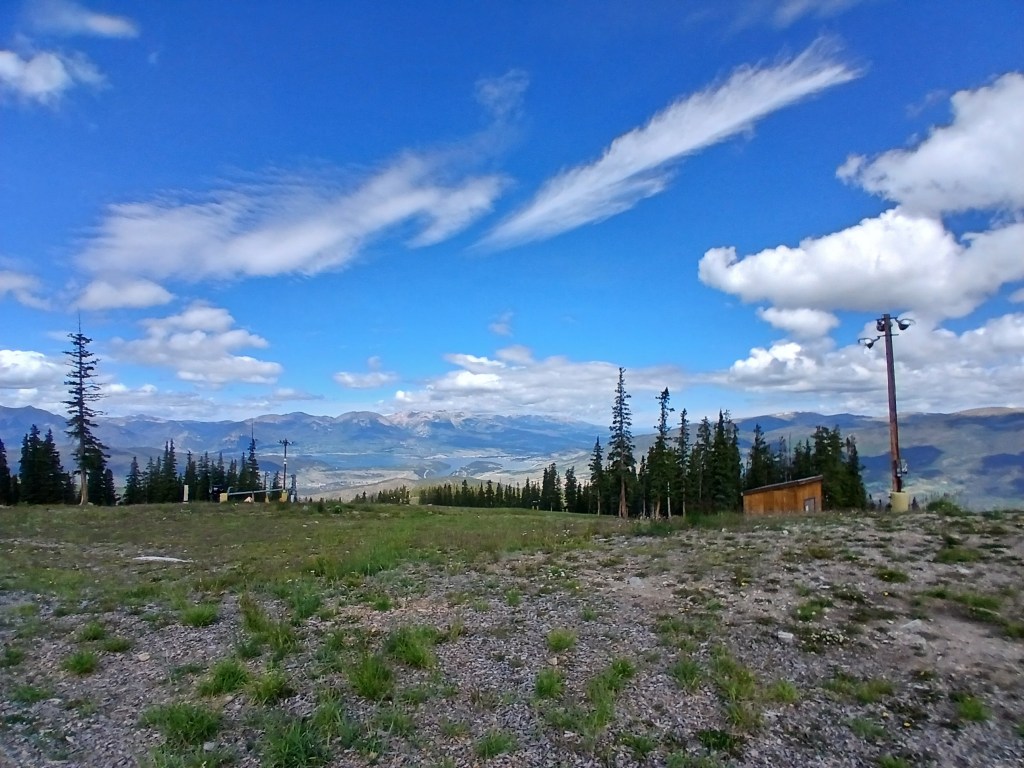
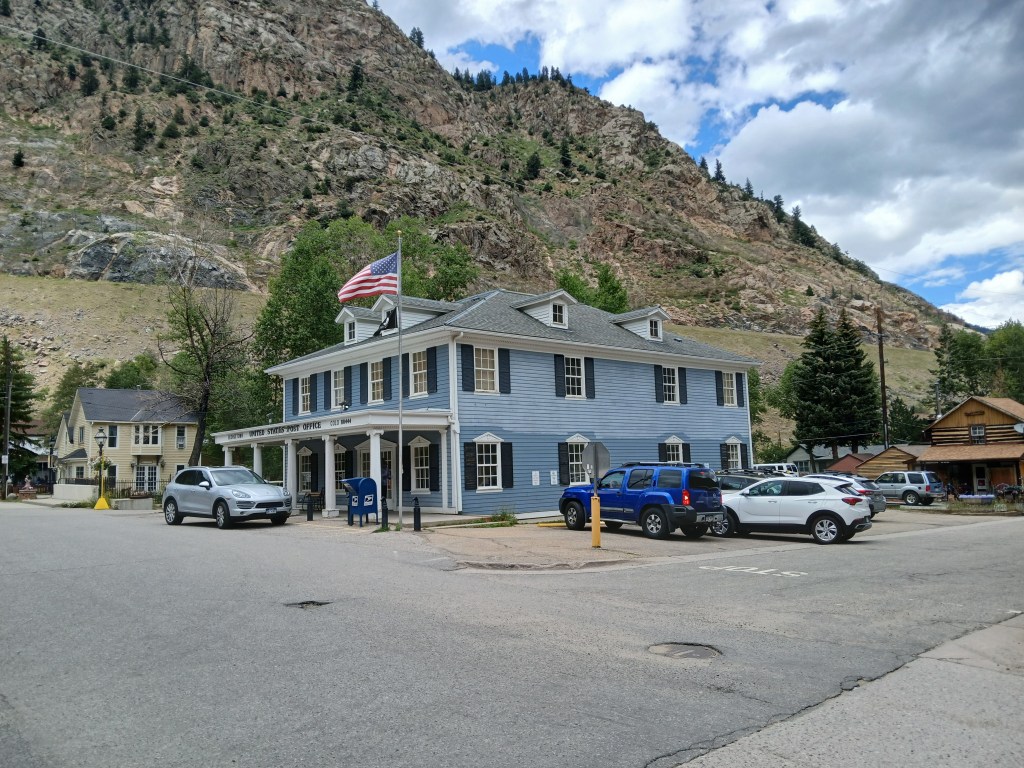
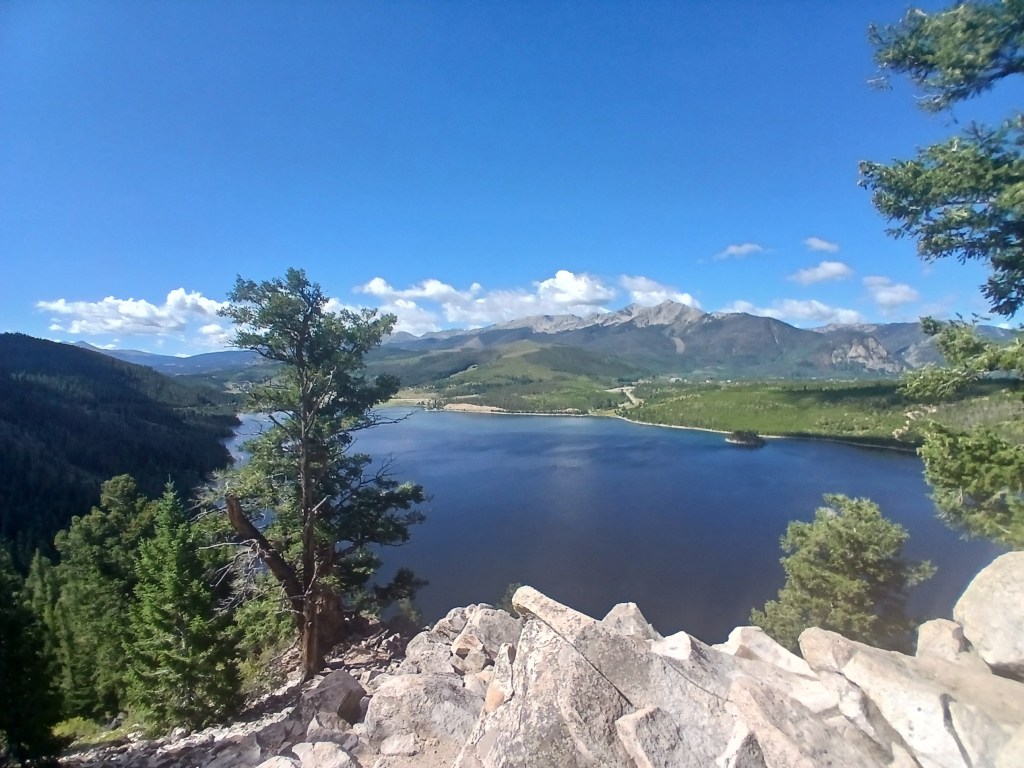
Pics are from the beautiful Keystone/Georgetown area in Colorado, which I miss very much
 Giulia Evolvi